2026-09-14 ·
How Often Should You Check Your Car Battery in UAE?
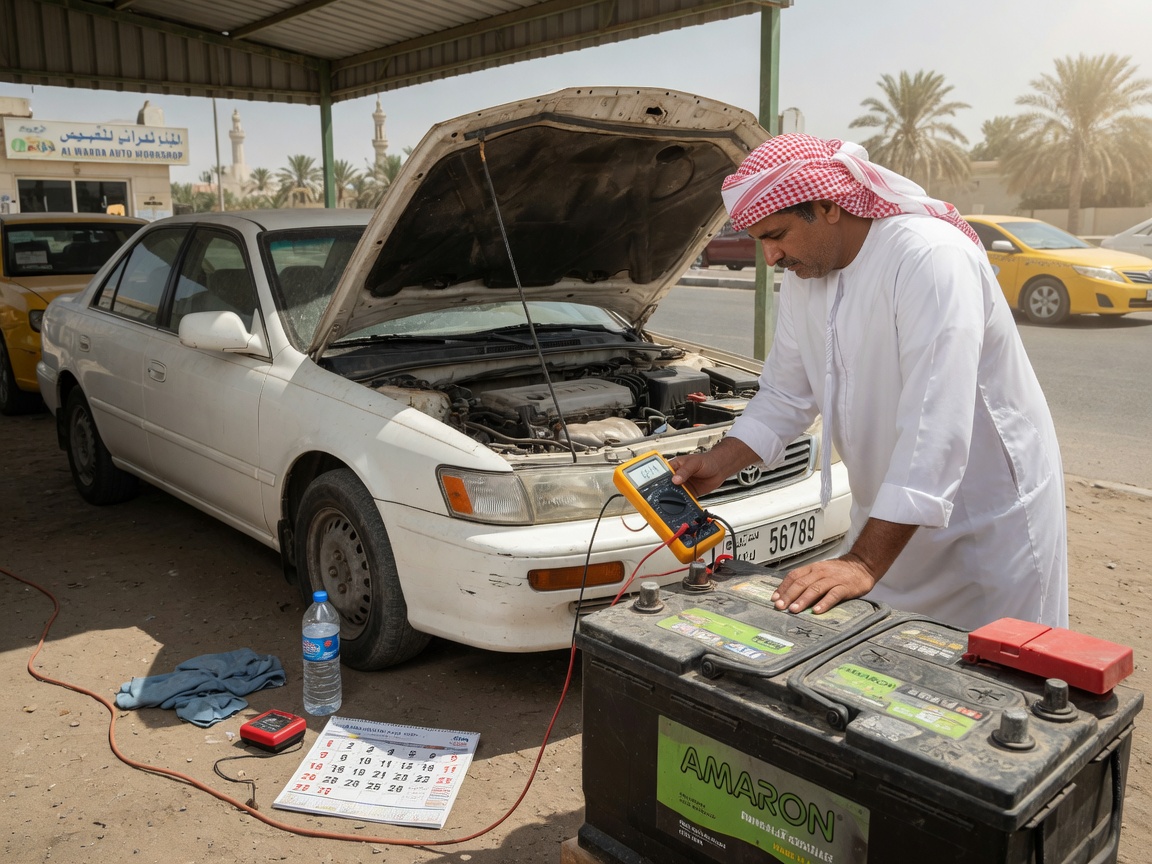
In the UAE, particularly across Sharjah and nearby areas like Ajman, you should check your car battery every three to six months. The intense summer heat that regularly exceeds 40 degrees Celsius drains battery capacity quicker than milder conditions elsewhere, so sticking to this interval catches issues before they strand you on routes through Al Majaz or the Industrial Area Sharjah.
UAE Heat and Its Effect on Battery Performance
Sharjah summers push temperatures high enough to warp battery plates and evaporate electrolyte fluid inside standard lead-acid units. Drivers who park outdoors in neighborhoods such as Al Taawun or Muwaileh see noticeable voltage drops after only four months of use. Frequent short trips around Hay Al Gharb compound the problem because the alternator never fully recharges the battery after each start. Checking voltage and terminals on a fixed schedule lets you spot corrosion early and decide whether a full Car Battery Replacement is needed before the next heat wave hits.
Practical Inspection Schedule for Sharjah Residents
Begin with a visual check every three months during peak summer months from May through September. In cooler winter periods, extend the interval to six months unless you notice dimming headlights or slow cranking. Residents in Tilal City and Al Sajaa who commute daily through stop-and-go traffic should lean toward the shorter end of that range. Keep a simple multimeter in the glovebox and test resting voltage after the car sits for two hours; readings below 12.4 volts signal the need for further testing or professional 24 Hour Car Battery Installation.
Common Warning Signs That Shorten Your Check Interval
Slow engine turnover when starting in the morning often appears first in vehicles left parked overnight near Al Qasba. Dashboard warning lights for the charging system can flicker during drives along Al Nahda road. If your battery is older than two years and you regularly travel to Al Ain or back through Rolla, move your inspection forward by a month. These signals matter more in the Sharjah area because high under-hood temperatures speed up internal degradation once any weakness develops.
When Professional Testing Beats DIY Checks
A basic voltage test at home works for routine monitoring, yet load testing reveals true capacity under real starting demand. Battery Rescue offers 24/7 Emergency Response for drivers in Hay Barashi or Al Rahmaniya who need on-site evaluation after hours. Their technicians use calibrated equipment that measures cold cranking amps against the demands of modern vehicles common in the UAE. When results fall below manufacturer specs, they can arrange same-day Car Battery Replacement without towing the vehicle to a shop.
Planning Replacement Before Failure Occurs
Most batteries in Sharjah last 24 to 36 months under local conditions. Track installation dates on your phone and schedule a replacement window two months before that mark if you drive older sedans or SUVs through Al Mamzar. Reviewing options such as AGM or EFB types helps match the battery to your vehicle’s electrical load. Reading The Realistic Car Battery Price in Sharjah gives current market ranges so you can budget without surprise costs when the time comes.